
Monica, the erotic fanzine
This is our daughter, Monica. She’s named Monica after her two grandmothers—our mothers—Mónica Lilienfeld and Mónica Pezdirc. This coincidence has intrigued us ever since we began our relationship, because it goes further: both Monicas were born in Argentina in the 1950s; both were daughters of European refugees; both eventually emigrated to Spain; and both were image-makers.
Mónica Lilienfeld was a painter who died very young. In her oil paintings she portrayed herself, merging her body with her dreams and fears. Mónica Pezdirc posed nude in hundreds of erotic photographs taken by her husband on the nudist beaches of Galicia.
In their canvases and photographs, thousands of Monicas appear. These thousand Monicas have mothered us, have inspired us, taught us... These Monicas have given form to us so that now we can give form to her, Monica.
Nuestra queridísima Mónica. Monica is our daughter, our non-human daughter. She is a stage piece that we present here in the form of a fanzine. A fanzine full of eroticism and desire, meant to reflect not so much on what an image is, but on what an image can do: inspire, teach, show, arouse.
Photography by Juan Antonio Papagni Meca
Digital environment by NastPlas
Make-up design by Esther Quintas
Design by Pietra Publications
Self-published, 2026.
Write us an email if you want to buy it !
This is our daughter, Monica. She’s named Monica after her two grandmothers—our mothers—Mónica Lilienfeld and Mónica Pezdirc. This coincidence has intrigued us ever since we began our relationship, because it goes further: both Monicas were born in Argentina in the 1950s; both were daughters of European refugees; both eventually emigrated to Spain; and both were image-makers.
Mónica Lilienfeld was a painter who died very young. In her oil paintings she portrayed herself, merging her body with her dreams and fears. Mónica Pezdirc posed nude in hundreds of erotic photographs taken by her husband on the nudist beaches of Galicia.
In their canvases and photographs, thousands of Monicas appear. These thousand Monicas have mothered us, have inspired us, taught us... These Monicas have given form to us so that now we can give form to her, Monica.
Nuestra queridísima Mónica. Monica is our daughter, our non-human daughter. She is a stage piece that we present here in the form of a fanzine. A fanzine full of eroticism and desire, meant to reflect not so much on what an image is, but on what an image can do: inspire, teach, show, arouse.
Photography by Juan Antonio Papagni Meca
Digital environment by NastPlas
Make-up design by Esther Quintas
Design by Pietra Publications
Self-published, 2026.
Write us an email if you want to buy it !
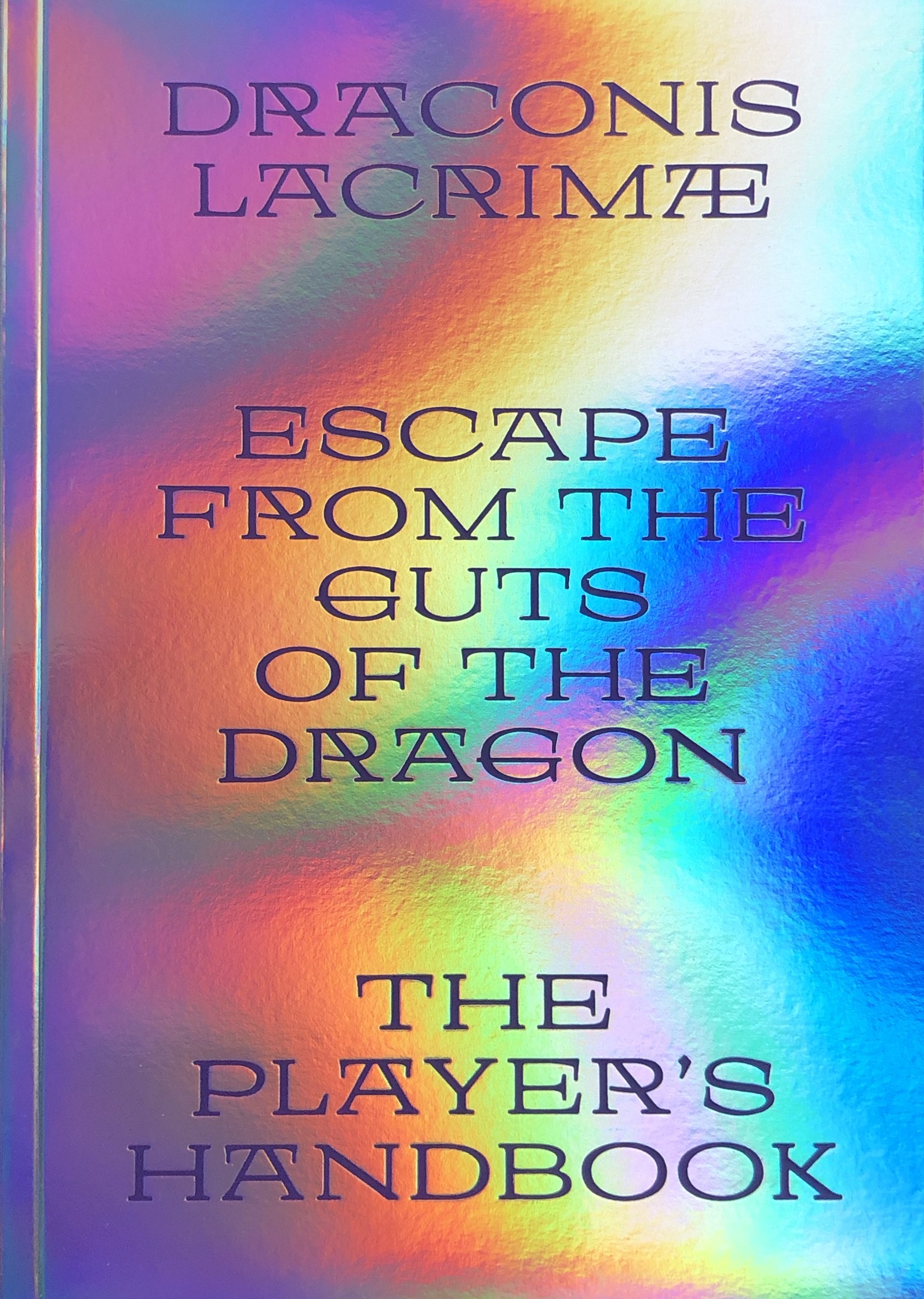
Draconis Lacrimae, The Player’s Handbook
Designed by P.G. Howlin
Published by a.pass, 2021
With contributions by Sabina Urraca, Florence Shaw, Roi Pardo, Heidi Smith, Federico Protto and Nacho G. Riaza.
The publication consists of two parts:
"Draconis Lacrimae. The Player’s Handbook” (A5, 160 pages), divided in three chapters: Character Building, World Building and Role-Playing.
“Draconis Lacrimae. After action report” (A5, 8 pages). A booklet that accompanies the book. An after action report contains the stories created during a game. This booklet is a draft of the fiction and characters created while playing Draconis Lacrimae.
The book can be purchased here:
Rile space (Brussels)
a.pass Brussels
Tienda Solidaria de La Casa Encendida, Madrid
Books Peckham, London
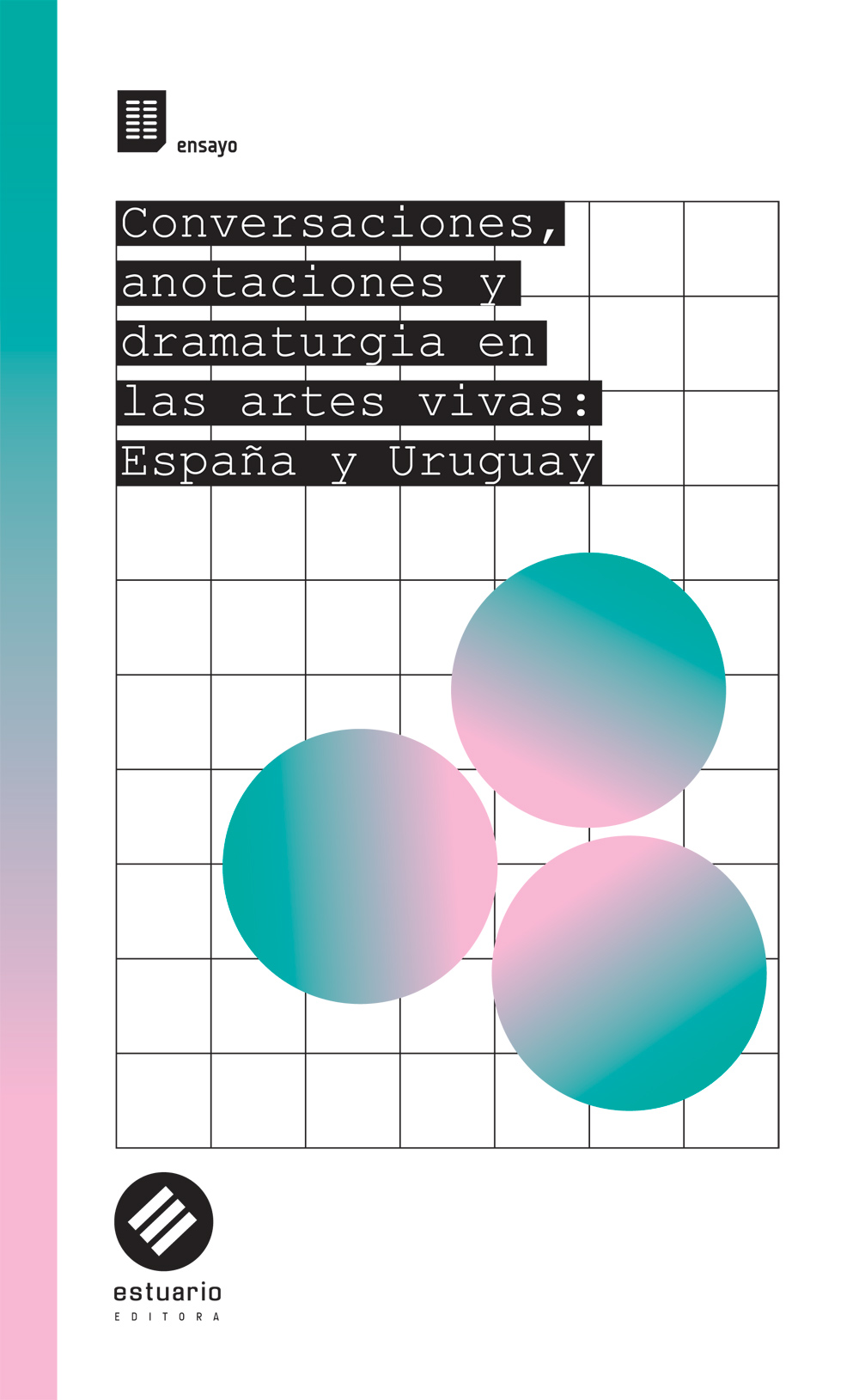
Conversaciones, anotaciones y dramaturgia en las artes vivas: España y Uruguay
The essay danza-ficción by Pablo Lilienfeld is included in this publication alongside texts by La Ribot, Dora García, Juan Domínguez, Paz Rojo and Aimar Pérez Galí among others.
danza-ficción is an essay about dance and language; choreography and power; fiction and automation. It resamples ideas from Rosi Braidotti, Laboria Cuboniks, Bojana Cvejić, Sadie Plant, Tristan García or Jaime Conde-Salazar in order to trace a discontinuous route through the many faces of artistic research.
2019. Languages: Spanish.
Published by Estuario Editora (Montevideo) and AECID.
Digital copy here.
The essay danza-ficción by Pablo Lilienfeld is included in this publication alongside texts by La Ribot, Dora García, Juan Domínguez, Paz Rojo and Aimar Pérez Galí among others.
danza-ficción is an essay about dance and language; choreography and power; fiction and automation. It resamples ideas from Rosi Braidotti, Laboria Cuboniks, Bojana Cvejić, Sadie Plant, Tristan García or Jaime Conde-Salazar in order to trace a discontinuous route through the many faces of artistic research.
2019. Languages: Spanish.
Published by Estuario Editora (Montevideo) and AECID.
Digital copy here.
Cómo engendrar a tu dragón
A lecture-concert about dragons and other collectively created creatures. Taking as a starting point our work and the tools offered by speculative fiction, we address questions about transindividuality, the post-human and non-hegemonic ways of narrating ourselves.
2019. Languages: Spanish with English captions
Hosted by Centro de Arte 2 de Mayo (Móstoles, Madrid) as part of the educational program Universidad Popular.
A lecture-concert about dragons and other collectively created creatures. Taking as a starting point our work and the tools offered by speculative fiction, we address questions about transindividuality, the post-human and non-hegemonic ways of narrating ourselves.
2019. Languages: Spanish with English captions
Hosted by Centro de Arte 2 de Mayo (Móstoles, Madrid) as part of the educational program Universidad Popular.

Haizebegi - Revue annuelle d’Anthropologie de la Musique
A publication accompanying the festival Haizebegi - Les mondes de la musique, Bayonne.
Haizebegi festival is dedicated to world music and those who create it. It takes place in Bayonne (in the French Basque Country) and focuses on the alliance between music and social sciences through concerts, films, public debates and workshops. The 2019 edition of the festival and its publication were dedicated to the culture of the selknam people. We were invited to participate with Songs of Hain.
2019. Languages: French, Basque and Spanish.
Published by Munduko Musiken Etxea and Institut ARI (CNRS, Bayonne).
Digital copy here
A publication accompanying the festival Haizebegi - Les mondes de la musique, Bayonne.
Haizebegi festival is dedicated to world music and those who create it. It takes place in Bayonne (in the French Basque Country) and focuses on the alliance between music and social sciences through concerts, films, public debates and workshops. The 2019 edition of the festival and its publication were dedicated to the culture of the selknam people. We were invited to participate with Songs of Hain.
2019. Languages: French, Basque and Spanish.
Published by Munduko Musiken Etxea and Institut ARI (CNRS, Bayonne).
Digital copy here
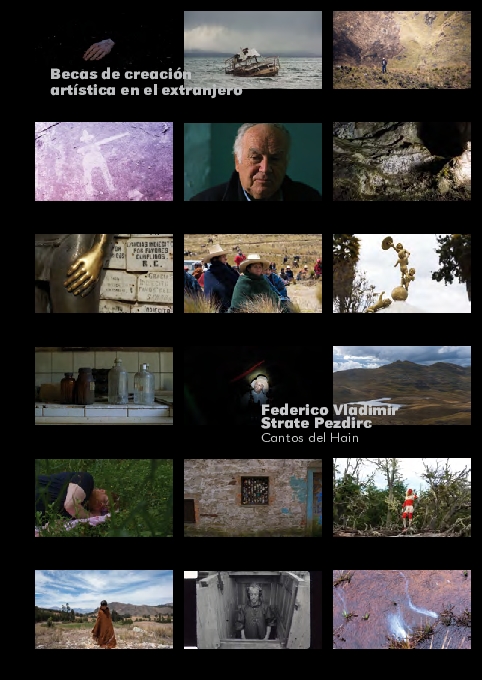
Songs of Hain exhibition catalogue
The catalogue includes commisioned texts by cuator and art researcher Luisa Fuentes Guaza; anthropologist and archaeologist Estela Mansur; ethno-aesthetics scholar Margarita Alvarado; art and sound researcher José Luis Espejo.
Reintegrating what belongs to us: The fluic body as epistemic tool.
Luisa Fuentes Guaza.
Hain, the rite of initiation of the Selk’nam from Tierra del Fuego.
María Estela Mansur.
The photographic fantasy of an ethnographer. Construction and assembly of an imaginary.
Margarita Alvarado Pérez.
The magical and the subjective. Three Selk’nam chant recordings 1907/1923/1966.
José Luis Espejo.
2017. Languages: Spanish and English
Published by Museo de Arte Contemporáneo Gas Natural Fenosa, A Coruña.
Digital copy here
The catalogue includes commisioned texts by cuator and art researcher Luisa Fuentes Guaza; anthropologist and archaeologist Estela Mansur; ethno-aesthetics scholar Margarita Alvarado; art and sound researcher José Luis Espejo.
Reintegrating what belongs to us: The fluic body as epistemic tool.
Luisa Fuentes Guaza.
Hain, the rite of initiation of the Selk’nam from Tierra del Fuego.
María Estela Mansur.
The photographic fantasy of an ethnographer. Construction and assembly of an imaginary.
Margarita Alvarado Pérez.
The magical and the subjective. Three Selk’nam chant recordings 1907/1923/1966.
José Luis Espejo.
2017. Languages: Spanish and English
Published by Museo de Arte Contemporáneo Gas Natural Fenosa, A Coruña.
Digital copy here
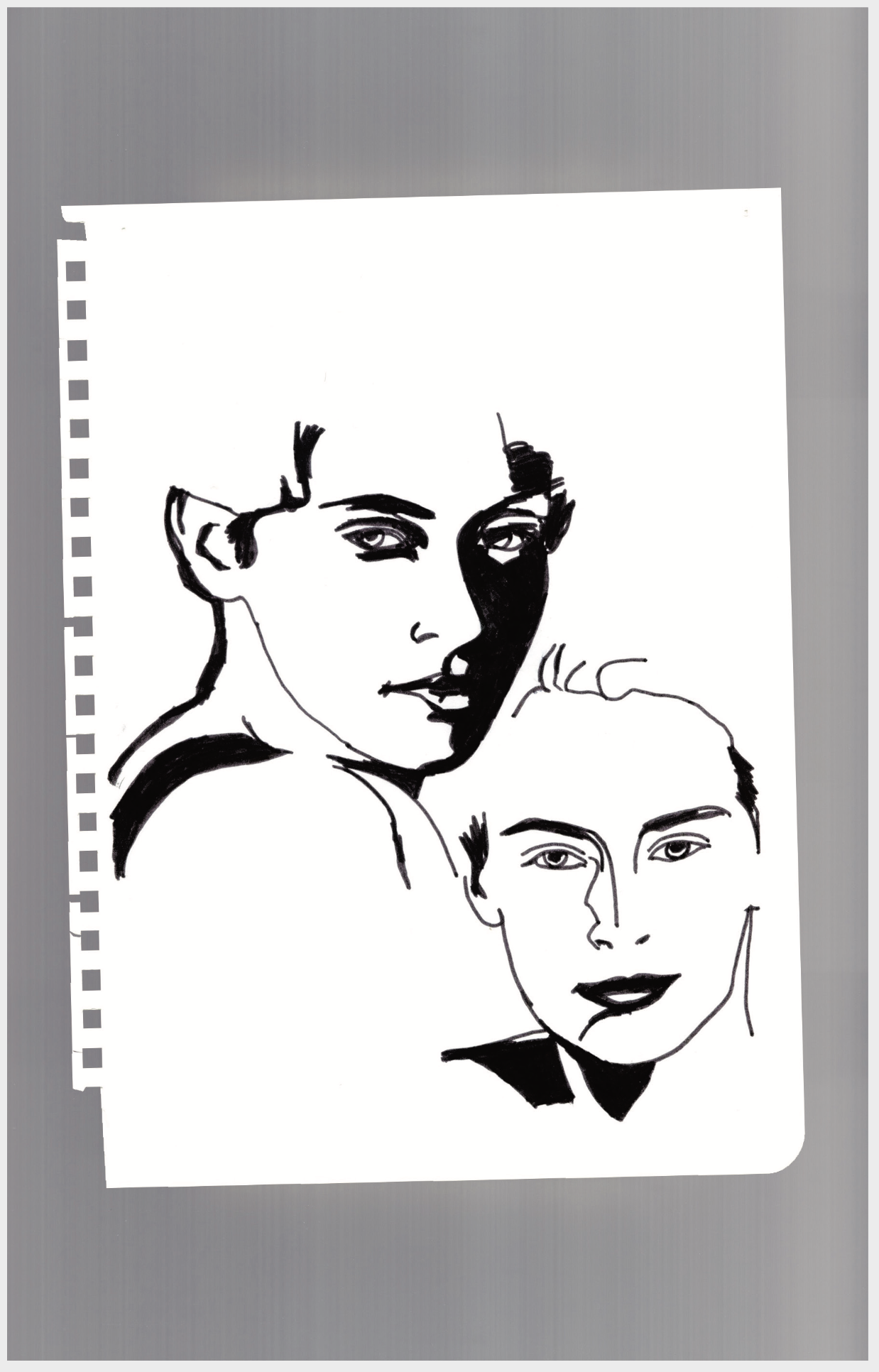

Desiderata
A publication that reflects on the queer communities and the world of libraries. A rare book born out of the cataloging labels of libraries. An attempt to think our desires to be.
Desiderata is a collective publication with contributions by Cabello/Carceller, María Salgado, Alejandro Simón, Alejandría Cinque, Javier Pérez Iglesias, Jesús Bravo, Mafe Moscoso, Raisa Maudit, Jesús Alcaide, Andrés Senra, Aimar Pérez Gali, Equipo Palomar and Pablo Lilienfeld + Federico Vladimir among others.
2015 Ed. Alejandro Simón
Languages: Spanish.
Published by Desiderata Editorial, with the support of Intermediae Matadero and Biblioteca Facultad de Bellas Artes UCM, Madrid.
Digital copy here.
A publication that reflects on the queer communities and the world of libraries. A rare book born out of the cataloging labels of libraries. An attempt to think our desires to be.
Desiderata is a collective publication with contributions by Cabello/Carceller, María Salgado, Alejandro Simón, Alejandría Cinque, Javier Pérez Iglesias, Jesús Bravo, Mafe Moscoso, Raisa Maudit, Jesús Alcaide, Andrés Senra, Aimar Pérez Gali, Equipo Palomar and Pablo Lilienfeld + Federico Vladimir among others.
2015 Ed. Alejandro Simón
Languages: Spanish.
Published by Desiderata Editorial, with the support of Intermediae Matadero and Biblioteca Facultad de Bellas Artes UCM, Madrid.
Digital copy here.

Introducing The Star. The album
Released June 3, 2016
The sound of Introducing the Star
Published in cassette and digital by:
- Illuminated Paths, Florida
- Nyapster, Barcelona
Available on streaming from most platforms like Spotify, Apple Mucic, etc
The music videos are here!
All songs by Pablo Lilienfeld
Arcade narrator in "One bone too many" Simon Foxall
Mixed at Eureka Records Córdoba by Fernando Vacas
Released June 3, 2016
The sound of Introducing the Star
Published in cassette and digital by:
- Illuminated Paths, Florida
- Nyapster, Barcelona
Available on streaming from most platforms like Spotify, Apple Mucic, etc
The music videos are here!
All songs by Pablo Lilienfeld
Arcade narrator in "One bone too many" Simon Foxall
Mixed at Eureka Records Córdoba by Fernando Vacas